
Survey offers snapshot of challenges facing local service organizations
By Nick J. Buckley for Black Squirrel News
BATTLE CREEK — The nonprofits many Calhoun County residents rely on for food, child care, housing, health care, transportation and other needs are facing financial pressure, according to survey findings shared May 8 with local leaders, funders and policymakers.
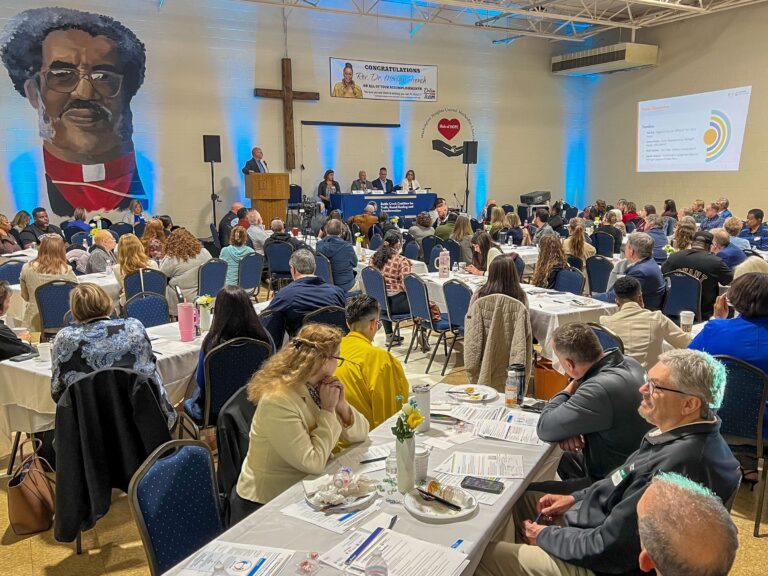
The findings framed the Calhoun County Nonprofit Advocacy Breakfast at Washington Heights United Methodist Church, where nonprofit leaders and public officials discussed funding losses and the role nonprofits play in the community.
“Nonprofits are not optional,” said Elizabeth Carey, president and CEO of Starr Commonwealth. “They are infrastructure.”
According to survey findings shared by the Battle Creek Coalition for Truth, Racial Healing and Transformation (BCTRHT) during the breakfast, 64% of 47 responding nonprofit organizations reported losing funding in the past year, with estimated losses totaling $6.85 million.
Organizers described the survey as a snapshot of challenges nonprofits are currently facing. Another 71% reported negative effects tied to funding losses.
Speakers pointed to inflation, workforce pressures and uncertainty surrounding future federal and state funding as contributors to the strain facing nonprofits. Survey findings presented during the event showed that 70% of organizations reporting losses lost government funding, while 40% reported losing private or philanthropic support.
While the discussion centered on nonprofits, speakers repeatedly framed the issue as one affecting the broader community — from families and older adults to employers and local government.
Hosted by BCTRHT, the breakfast focused on advocacy, collaboration and communication between nonprofits and policymakers.
Carey said Calhoun County is home to more than 900 nonprofit organizations employing roughly 10,000 people. Other speakers pointed to rising housing, food and utility costs affecting families across the county.
Kathy Szenda Wilson, co-executive director of Pulse, pointed to child care as one example of how nonprofit and community systems affect families, employers and the broader economy.
“It is an invisible effort that allows all of us to go to work — that allows your teammates, if you don’t have children, to be there and be productive,” Szenda Wilson said.
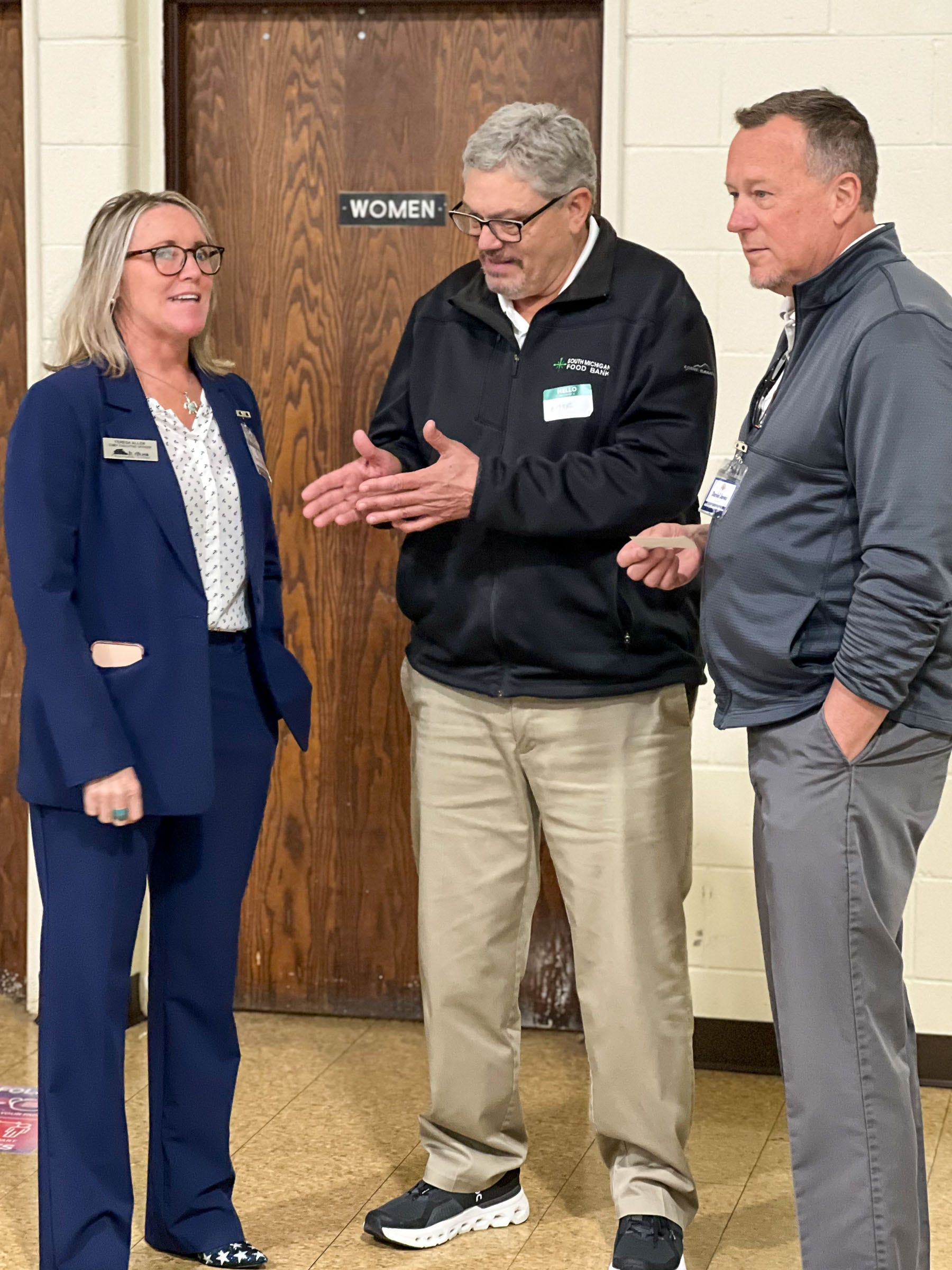
The event also focused on advocacy and communication with policymakers. Kelley Kuhn, president and CEO of the Michigan Nonprofit Association, encouraged nonprofit leaders to remain engaged with elected officials and educate the public about the work nonprofits do in their communities.
“If you know your organization’s name, you know what you do, and you know why it is important, that is advocacy,” Kuhn said.
A panel discussion moderated by Chris Sargent, CEO of United Way of South Central Michigan, included Kali Fox, regional director for the office of U.S. Sen. Gary Peters; state Rep. Steve Frisbie; Calhoun County Board of Commissioners Vice Chair Matt Saxton; and Jayme Vosovic, community engagement director for the Michigan League for Public Policy.
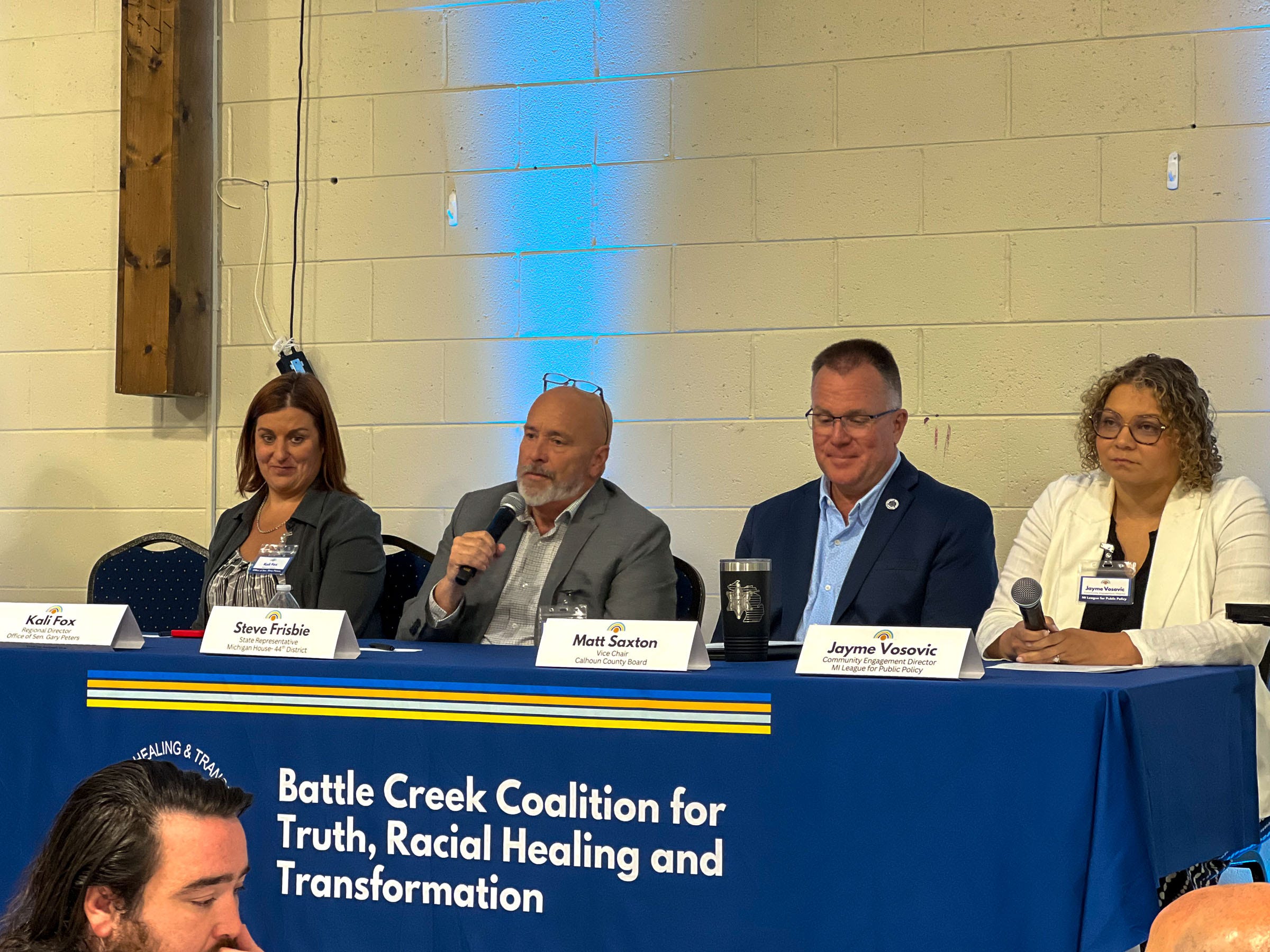
Panelists discussed affordability, housing pressures, Medicaid and SNAP uncertainty, and communication between nonprofits and policymakers.
In closing remarks, emcee Kara Beer, president and CEO of the Battle Creek Area Chamber of Commerce, said the conversation should continue beyond the breakfast.
“What comes next? First, we must tell a story. Not just with the data, but with the real stories of impact,” Beer said. “Because stories move people, and people move policy.”
Beer urged organizations to stay connected and engaged, describing nonprofits, funders, policymakers and community members as part of “one ecosystem” with “one shared responsibility to get this right.”
How we reported this
This story was reported through attendance at the 2026 Nonprofit Advocacy Breakfast. Calhoun County data was provided by the Michigan League for Public Policy and bctrht.org.
Photos by Nick J. Buckley